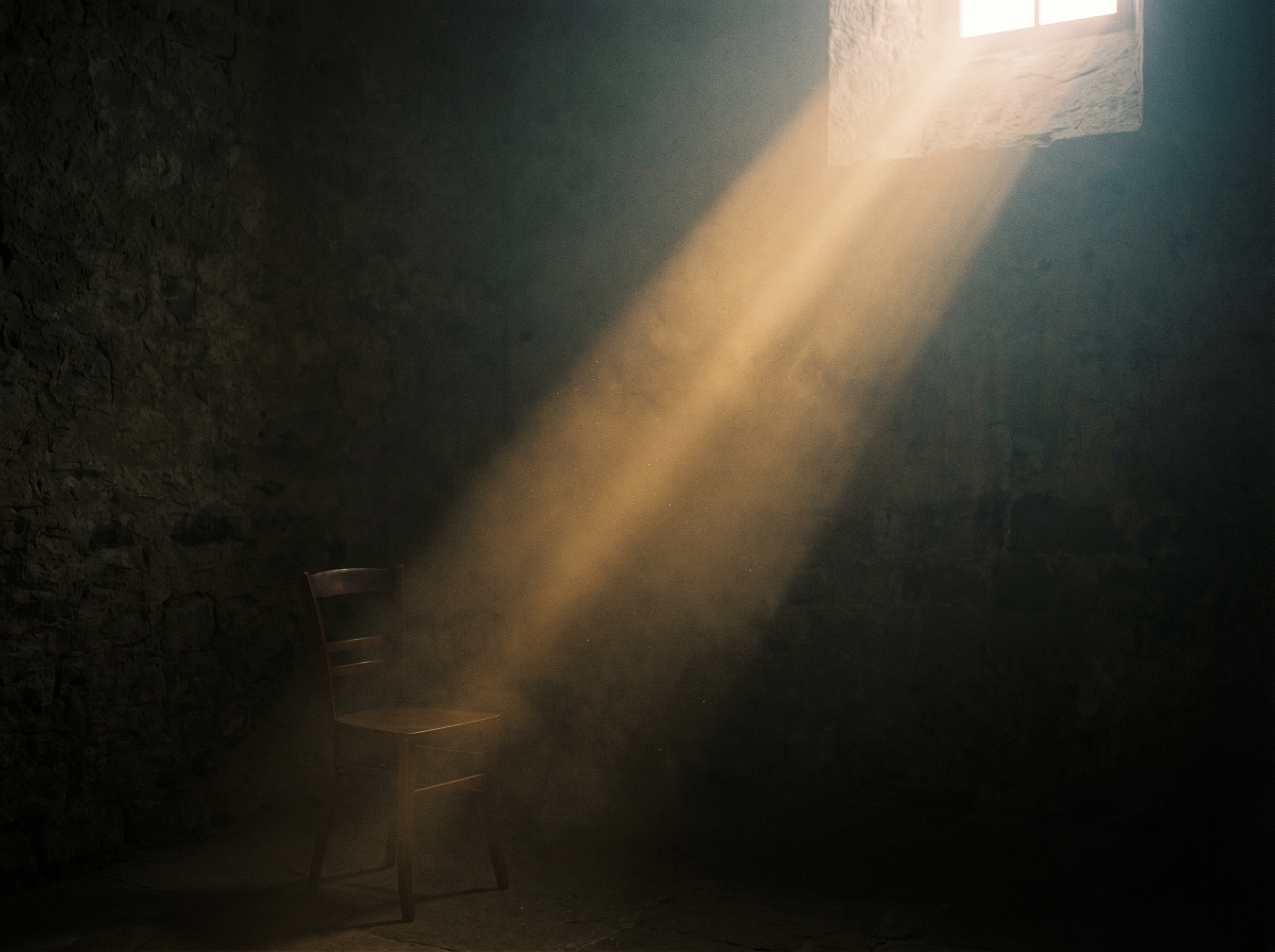
The discomfort of
becoming honest.
The most uncomfortable moment isn’t the truth itself. It’s the second before you stop avoiding it.

The hardest part of honesty with yourself isn’t the truth. It’s the moment just before it, when a part of you realizes you’re about to stop pretending, and every system you’ve built around the pretending starts to tremble.
Most people never cross that moment. Not because they’re incapable of honesty, but because the cost of it, in that exact second, feels higher than the cost of continuing to look away.
So they look away again. And call it peace.
The truth is almost never new
When people talk about a “breakthrough,” they often describe it as discovering something. That’s not usually what happens. What actually happens is that they stop disqualifying something they’ve known for months, or years, or a lifetime.
Honesty, most of the time, is not finding out. It’s admitting.
Admitting that the relationship hasn’t worked for a long time.
Admitting that the career brings you very little.
Admitting that the person you’re trying to convince doesn’t want to be convinced.
Admitting that the version of yourself you’re defending isn’t the one you want to be.
Why it’s uncomfortable
Because honesty, when it lands, doesn’t stay as a thought. It asks something of you. It rearranges priorities. It changes conversations. It sometimes changes rooms, or people, or entire chapters. The mind knows this, and so it stays in a loop of almost-admitting, where nothing yet has to change.
- You can feel stuck for years while technically knowing the answer
- You can research, read, journal, and discuss without ever naming the one thing that matters
- You can build a very convincing case for why this isn’t the right time
All of these are forms of staying on the edge of honesty without actually stepping into it.
The threshold
The moment you cross is rarely dramatic. It’s usually quiet. A sentence you don’t take back. An exhale you didn’t expect. A stillness that replaces the turning. Afterwards, the world has not rearranged itself yet, but something inside has.
You know you’ve crossed it when the question stops repeating.
What helps
Don’t try to be brave. Bravery is a later step. Start with smaller honesties. Small truths build a nervous system that can hold larger ones.
- Say the slightly more accurate version of what you were about to say
- Name what you actually wanted, not what seemed acceptable to want
- Tell one person the 10% of the truth you usually leave out
- Write the sentence you’d never say out loud, just to see it exist
Each one of these expands your capacity for the next. Honesty is a muscle that grows in private, long before it appears in public.
Eventually
You realize the discomfort you were avoiding was never the truth itself. It was the cost of continuing to avoid it. And on the other side of that single, uncomfortable second, the one everyone spends their life circling, there is something quieter, cleaner, and more yours than anything you had before.
Most people avoid seeing themselves clearly. The ones who don’t are the ones who change.