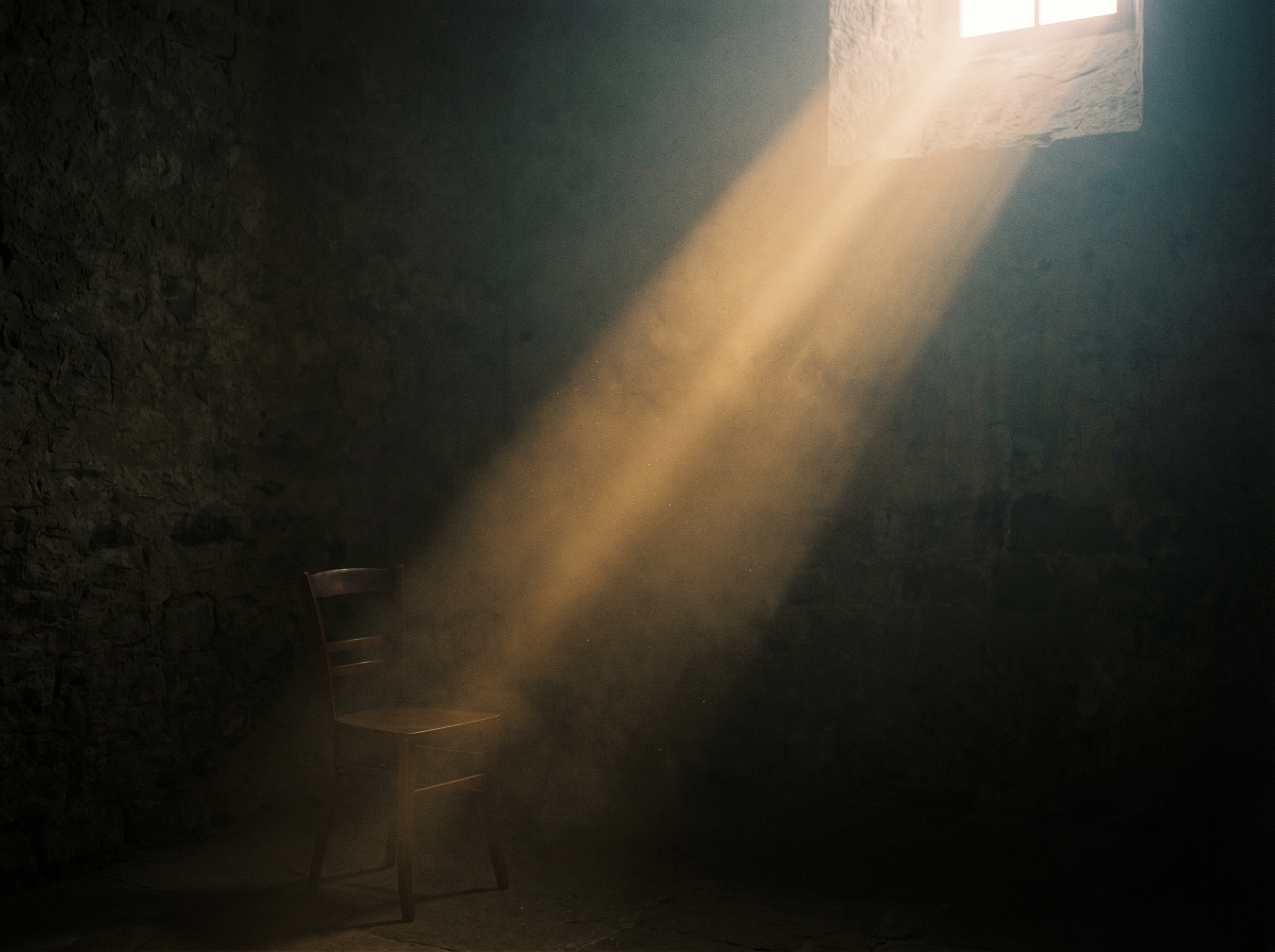
The version of you
you’re outgrowing.
Some of what you’re calling fear is actually recognition. Something in you already knows.

There’s a particular kind of discomfort that doesn’t look like discomfort at first. It shows up as restlessness. As sudden, inexplicable impatience with things you used to tolerate. As a flatness around people, routines, or conversations that used to feel alive.
Most people interpret that flatness as a problem, something to fix, shake off, or medicate. But if you sit with it long enough, you begin to notice something else underneath it.
A version of you is ending.
What you’re feeling isn’t decline
It’s recognition. Some quieter, more honest part of you has already glimpsed a next version. One that doesn’t fit the life you’ve built around the current one. And because it hasn’t arrived yet, there’s no obvious language for it. So the mind does what the mind does: it reaches for fear.
What if I’m losing it. What if I’m unstable. What if I’m becoming difficult.
You’re not becoming difficult. You’re becoming more accurate.
The version of you you’re outgrowing isn’t leaving you.
It’s handing you back to yourself.
The small signs are the real signs
- Conversations you used to enjoy now feel like small performances
- You’re less interested in being understood and more interested in being honest
- What you’re pursuing has started to feel faintly embarrassing, even if it’s admirable by every outside measure
- You find yourself wanting silence more often than stimulation
These aren’t warning signs. They’re information. They’re how a self begins to shed the arrangements it has outgrown.
Why it feels like grief
Because it is. You built a life, sometimes decades of it, around a version of yourself. That version loved certain people. Chose certain work. Tolerated certain rooms. When it begins to dissolve, there’s real loss underneath the change. The discomfort is honest.
And still: the grief is proof that something is moving. You can’t grieve what isn’t ending. You can’t outgrow what isn’t being outgrown.
What to do with it
Almost nothing. Not yet. The work, at first, is not to act. It’s to witness. To let the old version finish what it came to do. To stop forcing momentum where stillness is being asked of you. To stop interpreting contraction as failure.
Then, when something clear enough begins to surface, a direction, a conversation, a truth you can no longer not say, move slowly, but move.
You don’t need to understand the next version to allow the current one to end.
You just have to stop pretending the one you’ve been still fits.
Continue